
How I've Made Over $3M Doing Storm Work
The playbook for running a lean storm trip that pays: where to go, when to bring the crew, and when to go home.
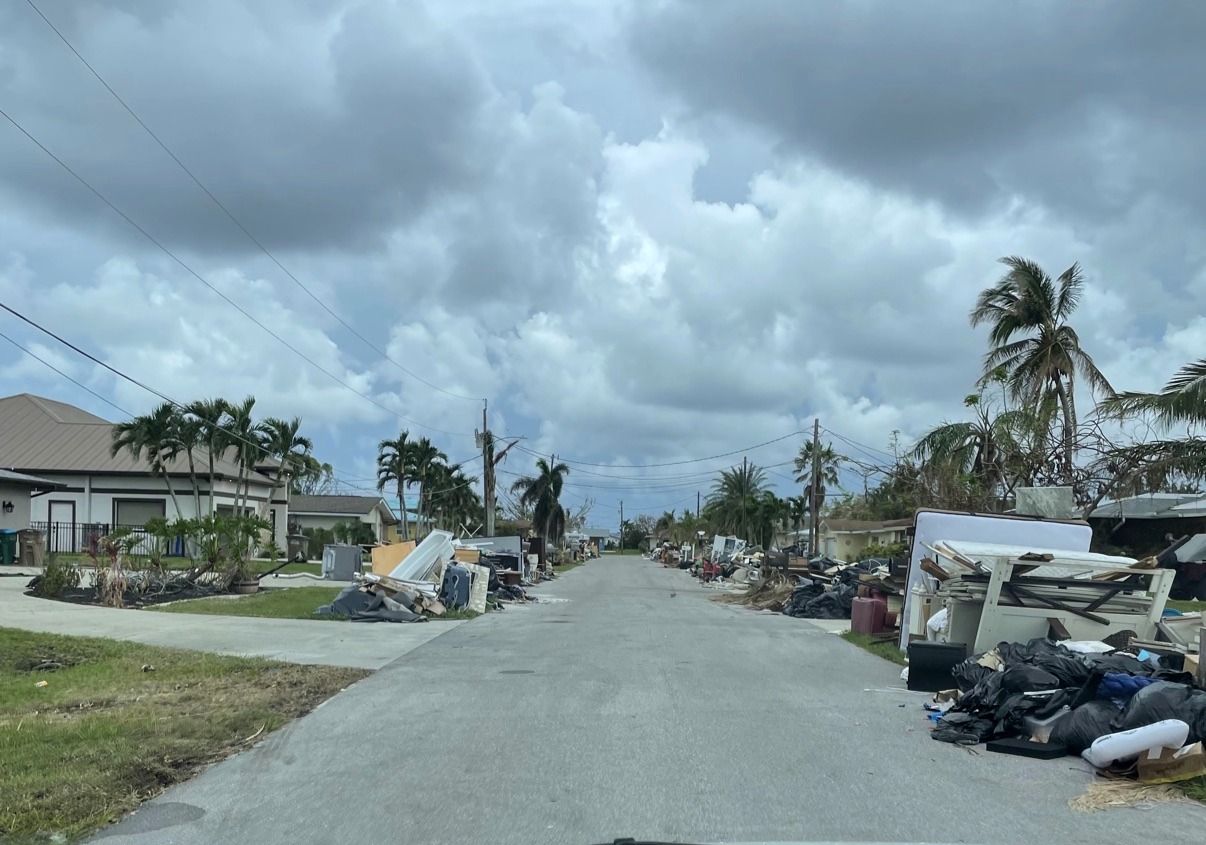
Hurricane Isaias just hit the Florida panhandle, and I've gotten several phone calls from peers asking if they should go, what to bring, and how to make the trip worth it. So I put together my ultimate playbook: everything I got wrong, what I do now, and how to run a lean storm trip that helps a wrecked community while paying you well. These are real lessons from my own storm trips.
Can you cover yourself at home?
Before you commit, ask yourself one question: can you cover yourself at home? The best time to go to a storm is when you're busy. The math is simple: if home operations cover the bills, storm work is upside. Go when you're slow, and unless you're a solopreneur, the financial pressure can become overwhelming. Don't sacrifice your home operation for a storm trip and then disappoint the customers that feed you on a daily basis.
Logistics basics
How to pick a destination
Go where the storm surge hit hardest, and go now. If you wait for the headlines two weeks from now or for reports on power being back on, you're too late.
I go immediately, and I pick where using one of three methods:
- Method A: TPA work. They assign you, you get steady work, and figuring out the rest gets easier.
- Method B: an affluent neighborhood. You're safer, more comfortable, and people pay easier.
- Method C: a small town that got hit. Fewer competitors, and people are often kinder.
Either way, I work the deep suburbs and back roads that competitors skip. I look for debris piled in front yards, neighbors outside working, garage doors open. If somebody started cleaning up, they're usually open to help.
One more thing: look up local licensing laws, not just the state. Check what the cities and local community leaders are saying. In my experience, extraction, demo, and drying are safe in most places. Mold, asbestos, and repairs are where it gets questionable. Look up the laws first.
Stay lean and go first
It's a small investment to put a couple thousand dollars on a credit card for a flight and hotel. It's a massive burden to send the crew before there's work: daily wages, overtime, hotels, food, all while they wait. That's how I got burned. I usually sold enough to break even, but the headache wasn't worth it.
I go first. I pick a method, A, B, or C, and my target is $50,000 of work sold. That means 12 to 15 inspections a day, or as many neighborhoods as I can cover. I map my route on the flight over. At each house I do the inspection and make the estimate on the spot (you can use my app for this). Price immediately, get the commitment, show them where to sign.
$50,000 is usually 2 to 8 jobs. I build trust and I buy time. I tell them the guys are busy and we're working as fast as we can to start soon. Terms are 50% upfront and 50% when we finish, but I don't collect anything until the team is in their front yard, ready to start.
While I'm selling, the move is already being planned. The team knows to get ready and say bye to their families. The trucks are being prepped. I've already found self-storage or an Airbnb for the equipment, the closest dump yard, and a hotel for the team.
A note on trucks
Trucks are already strained from day-to-day work, and driving them hours or days to a storm is an even bigger strain. I've had tires pop and engines fail. The repairs were costly, and my technicians aren't mechanics. Breaking down in a remote town makes everything harder.
What I do now is put $12,000 on a credit card and ship two trucks full of equipment on a flatbed. No wear and tear on the way there. I fly the team in. When the event is over, they drive home. And the credit card has always been paid off by the revenue from the storm.
Executing the work
Project management and bidding are skill sets you already have. So I'll focus on what changes when you're traveling:
- Make the homeowner happy. After a hurricane, neighbors talk to each other constantly. One homeowner who trusts you becomes your champion for three more on the same street. Take care of the customer in front of you and the next ones find you.
- If you have a choice, take the bigger project. Selling one big job is the same headache as selling several small ones.
- Keep track of your costs every single day. At storm pace, money leaks fast if you're not watching it.
- Keep an eye on your crew and your equipment. Somebody gets pulled over. A truck gets broken into. A temp acts wrong at a job site. You're running the job from a distance, so your crew has to act as their own project managers, especially once temps are their responsibility. Build a relationship with a local company or two while you're there, in case you need them for warranty issues or mold follow-up after you leave.
- Your days split two ways: the minimum project management to keep jobs moving, and getting back out to sell. The selling never stops while you're there. Once the crews are rolling, my job is mostly selling, because selling is what extends the stay.
- Here's how the scheduling works: one of your technicians becomes the supervisor at a job site, with several temps under them. You'll quickly see which temps are reliable. Some will even approach you and ask to work with you exclusively.
- Here's a golden tip: I love condos. A condo building has far more neighbors than a street, and the HOA holds board meetings where everyone is trying to solve the same problem together. I've pitched at those meetings and walked out with several units. I've seen others take the entire HOA. When that happens, I wrap up my smaller projects and put every resource on the one spot.
The pace is brutal. Twelve to fourteen hour days, no days off for the first week or two. It costs you, but it's worth it once you're past $100,000. Cover the crew's meals. Treat them well. They're there to earn and they're willing to work harder for it.
When to go home
Your crew can stay as long as the work is there. Sometimes you rotate crews in. Sometimes a guy has to go home for family obligations. As long as your costs are covered, those decisions are easy.
The signal is simple. When a crew is sitting at the hotel with nothing to do for more than two days, I start evaluating whether they go home. Honestly, I rarely wait that long. You develop an instinct for when a storm is wrapping up.
When it's over, take care of the team. Give them a couple of final days for themselves. Let them enjoy the city, put a good meal on the company card, decompress. Then go home.
The numbers
Once you've made $50,000 with one crew, you can bring in a second. In a good neighborhood, two crews can typically sell $100,000 to $300,000, sometimes half a million. Many customer quotes can be in the $10,000 to $30,000 range. Enough of these between neighbors can sometimes turn into half a million.
You're doing really well if you've made over half a million with two or three crews. If a lot of that is self-pay, you're doing incredible. With insurance work, you can do well over a million. Commercial and condos make those numbers easier. Fewer projects but at high volume, and the event becomes extremely profitable. Commercial jobs deserve an article of their own. Maybe that's next.
On margins: as long as your bills are paid at home and you keep controlling costs, expect 40 to 50 percent. Costs will try to get out of hand. Flights, rental cars, all of it. Be intentional about staying frugal and the profit will be there, especially at that revenue. There will always be unexpected costs. You just deal with them.
It's like being up at a casino. Once you've won back your initial stake, every bet after that carries a lot less risk. The first $50,000 covers what the trip costs you. Everything past that is upside.
In conclusion
Traveling for storms isn't for everybody. A lot of seasoned people know how to do this and find their own method. This is mine, but everybody starts somewhere, and it takes courage and grit to decide to go. It can be one of the most amazing experiences you've ever had in this industry.
And remember why you're there. Making money at a storm has to become an insatiable thirst until you've absolutely knocked it out of the park. If you just do okay, you could have done okay at home. You're away from your family, sacrificing to be there. So knock it out of the park, and make a difference while you do it.
If you found this helpful, check out Wave. It's built for making estimates at the job site on day one. It works in the field, and it works at home too. If you ever have any questions about storm travel or the app, feel free to contact me at albert@buildwithwave.com.
Related Articles
Nobody Knows the Number
In restoration, you don't get paid when the work is done. You get paid when the fight ends. Why we built Wave, from a family that lived it.
What Franchise Restoration Operators Are Actually Up Against (And What I'm Building)
Working with restoration companies across the country, I keep hearing the same story from franchisees. It is the structure they operate inside, not the brands themselves, that is squeezing them.
We Must Change Everything, Or We Die
The traditional restoration workflow is a death sentence for cashflow. Here is how we can fix it.